

Views: 0 Author: Site Editor Publish Time: 2025-12-19 Origin: Site
In recent years, the demand for cleaner engines, longer service cycles, and more efficient vehicle performance has pushed the filtration industry into a rapid stage of transformation. Among all filtration materials, Air Filter Paper has taken center stage—not only because it affects engine breathing and fuel efficiency, but also because it directly impacts user experience and long-term maintenance costs.
In 2025 and beyond, global automotive filtration is shifting toward smarter, more durable, and environmentally friendly solutions. This changing landscape has made Air Filter Paper a keyword of growing interest for both manufacturers and vehicle owners. Companies such as Hebei Oujin Nonwoven Technology Co., Ltd are deeply involved in this transition, bringing new material concepts and production advances to the market.
This guide explores the essential trends shaping the future of filtration, the evolving role of Air Filter Paper, how it compares with automotive filter paper, oil filter paper, fuel filter paper, and other filter media, and what buyers should look for as the market rapidly changes.
As automakers develop engines with tighter tolerances, higher compression ratios, and more complex air-intake designs, Air Filter Paper becomes more important than ever.
Drivers today expect:
Smoother acceleration
Lower fuel consumption
Longer intervals between filter changes
Cleaner emissions
All these expectations hinge on how well the engine breathes. That is why Air Filter Paper is evolving—its structure, porosity, wet-strength properties, and dust-holding capacity are now optimized for new-generation engines.
By 2025, the market shows three clear trends:
Higher filtration precision due to stricter emissions regulations
Better airflow performance to support turbocharged and hybrid powertrains
More sustainable raw materials as part of global eco-initiatives
The demand for advanced Air Filter Paper is therefore increasing. When buyers browse options such as Air Filter Paper, they are already seeking materials that align with these requirements.
Air Filter Paper is no longer just a simple cellulose-based sheet. New technologies are reshaping how it performs and how long it can last. This transformation is influenced by several new 2025 market expectations:
Turbocharged engines, hybrid engines, and smart intake systems require filtration materials that allow more airflow without sacrificing dust-blocking efficiency.
Air Filter Paper has been reformulated to improve:
Pore uniformity
Air permeability
Dust load capacity
Heat resistance
Car owners prefer minimizing filter replacements. This encourages materials that:
Capture more contaminants
Resist collapse under humidity
Maintain pleat stability
Sustainability trends are pushing manufacturers to use recyclable or lower-impact fiber blends. Air Filter Paper is evolving with improved cellulose compositions and reduced chemical additives.
Understanding the relationship between Air Filter Paper and other filtration materials helps buyers choose the right product for their needs.
| Filter Material | Primary Function | Durability | Filtration Precision | Best Use Case |
|---|---|---|---|---|
| Air Filter Paper | Filters intake air for the engine | High | Medium–High | Air intake systems needing high airflow |
| automotive filter paper | General term for paper in multiple automotive filters | Medium | Varies | Broad automotive applications |
| oil filter paper | Removes impurities from engine oil | Very High | High | Protecting internal engine components |
| fuel filter paper | Captures fuel contaminants | High | Very High | Fuel-line protection, injectors, pumps |
| other filter media | Includes synthetic fibers, composites, etc. | Varies | Medium–High | Specialty applications |
Among all these, Air Filter Paper stands out in 2025 for balancing airflow and dust capacity—two performance metrics that matter most for modern engines.
While fully electric vehicles (EVs) do not use traditional engine air filters, hybrid vehicles still rely heavily on Air Filter Paper. As hybrid adoption increases, demand remains strong.
Governments worldwide are applying stricter standards, requiring filtration materials with improved performance and consistency.
Many vehicle owners shift toward aftermarket filters because:
They want lower maintenance costs
They want better-quality materials
They want parts that last longer
This keeps interest in Air Filter Paper high across global markets.
Based on user behavior and search trends, the following features are the most requested:
Drivers want filters that last longer without clogging.
Paper must stay strong even when moisture is present.
This maintains airflow while blocking fine particles.
Manufacturers need material that forms stable pleats.
More customers are searching for eco-friendly or cleaner-manufactured materials.
These expectations explain why Air Filter Paper is attracting significant attention—especially options like Air Filter Paper that are designed for consistent manufacturing quality.
Manufacturers increasingly request tailor-made filtration solutions—thinner materials with the same or better strength and efficiency.
While cellulose still dominates, small portions of synthetic fibers may be blended to improve durability and moisture resistance.
This increases demand for affordable yet reliable Air Filter Paper, as more drivers choose aftermarket options.
Countries with rising car ownership fuel additional demand for engine filtration materials.
Hebei Oujin Nonwoven Technology Co., Ltd is part of the evolving filtration landscape, providing Air Filter Paper that meets modern flow-rate requirements, durability expectations, and environmental considerations.
Buyers exploring Air Filter Paper solutions may consider high-performance options such as: Air Filter Paper. This material supports both OEM and aftermarket applications, aligning with the 2025 trends mentioned above.
Vehicle filtration systems function as a coordinated network. Understanding their relationship helps users appreciate why each material matters.
Protects engine combustion by preventing dust entry
Maintains efficient airflow
Removes carbon deposits and metallic particles from engine oil
Extends engine life
Blocks contaminants inside fuel
Protects injectors, pumps, and fuel lines
Used in specialty filters such as cabin filters, hydraulic filters, and high-temperature environments
Together, these materials ensure smooth engine performance, lower emissions, and reduced maintenance.
Below are practical considerations for selecting the correct grade of Air Filter Paper:
Turbocharged engines require higher airflow grades.
Higher efficiency helps reduce engine wear.
Longer service intervals depend heavily on this factor.
Good materials must maintain structure under vibration and humidity.
Lightweight, eco-friendly, and durable options are preferred.
Air Filter Paper is specifically engineered to balance airflow and dust-blocking capacity, which distinguishes it from oil filter paper, fuel filter paper, and other filter media used in automotive filtration.
Replacement cycles vary, but most drivers change their air filters every 15,000–25,000 km depending on driving environment and filter quality.
Yes. Clean Air Filter Paper supports better combustion, which can positively affect fuel economy.
Most gasoline, diesel, and hybrid vehicles depend on Air Filter Paper-based filters for proper air intake.
Yes, especially newer formulations designed with improved airflow and stability.


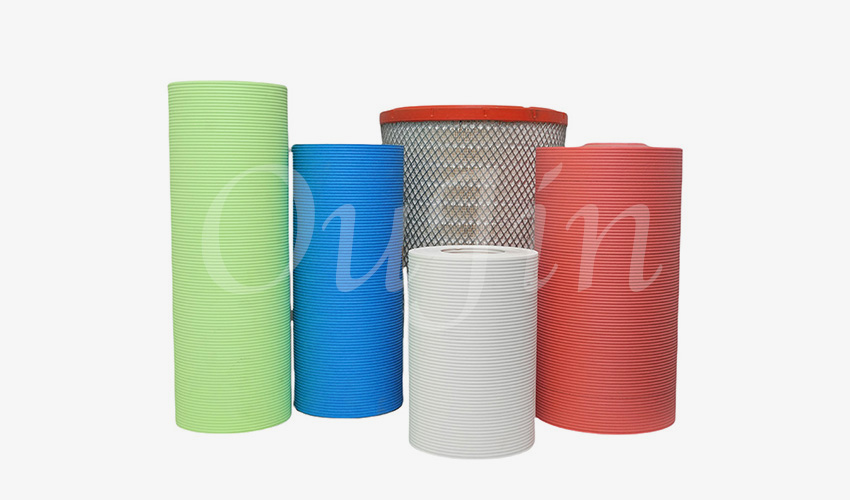 What Buyers Look for in High-Quality Air Filter Paper (2025 Insight)

